Dutch Folk
Sinterklaas Songs: What Dutch Children Sing, and When
Dutch children sing to Sinterklaas at the arrival, at the shoe and on gift evening. Meet the classic songs, who wrote them and how they changed. National arrival: 14 November 2026.
Plain-English guides to maqam, the oud and the darbuka, the great Arab voices, and the Dutch folk, organ and dance traditions, with the sources to keep exploring.
 Newest guide · No. 29
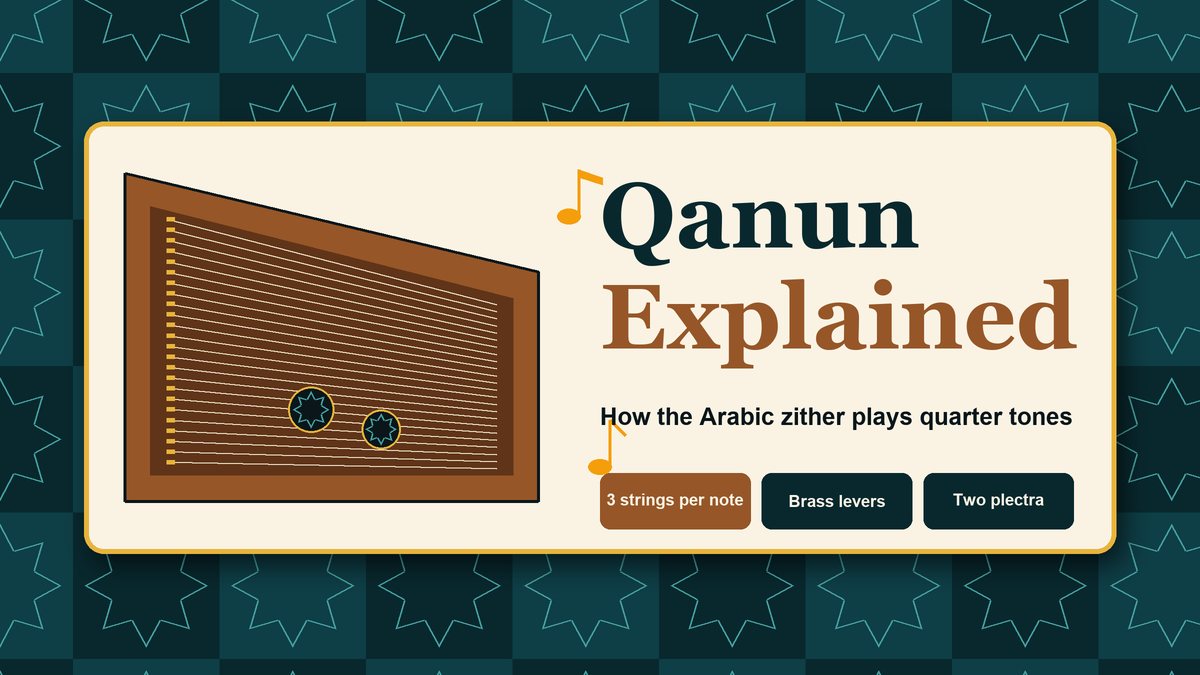
The qanun is a plucked table zither with brass levers under every string course. See how it is built, how a player changes maqam mid-song, and which recordings to hear first.
Start with the tradition you are curious about. Each shelf lists our newest guides first.
Maqam, great voices, Khaliji, Andalusian and modern Arab sounds.
Folk songs, street organs, Frisian culture and the electronic scene.
Oud, qanun, ney, darbuka and the Dutch instruments behind the tunes.
Pick a rhythm and press play. Every Arabic rhythm is built from two strokes: dum, the deep note from the centre of the drum, and tak, the crisp note from the rim. Slow it down, count along, then listen for it in a song.
dumtakrest
Maqsum 4/4 The everyday groove of Arabic pop and classical songs. If you learn one rhythm, learn this.
Numbered in the order we published them, like tracks on a record.
Dutch children sing to Sinterklaas at the arrival, at the shoe and on gift evening. Meet the classic songs, who wrote them and how they changed. National arrival: 14 November 2026.
New to the oud? Learn the common tunings, how to hold the risha, why maqam Rast is the best first scale, and a simple 15-minute routine for your first week.
Umm Kulthum's best-known songs run about 50 to 60 minutes, and live versions ran longer. Here is why, what to expect, and how to listen for the first time.
New to Fairuz? Start with these five songs, then explore the Rahbani classics, her poetry songs, the jazzier Ziad Rahbani albums and her Christmas hymns.
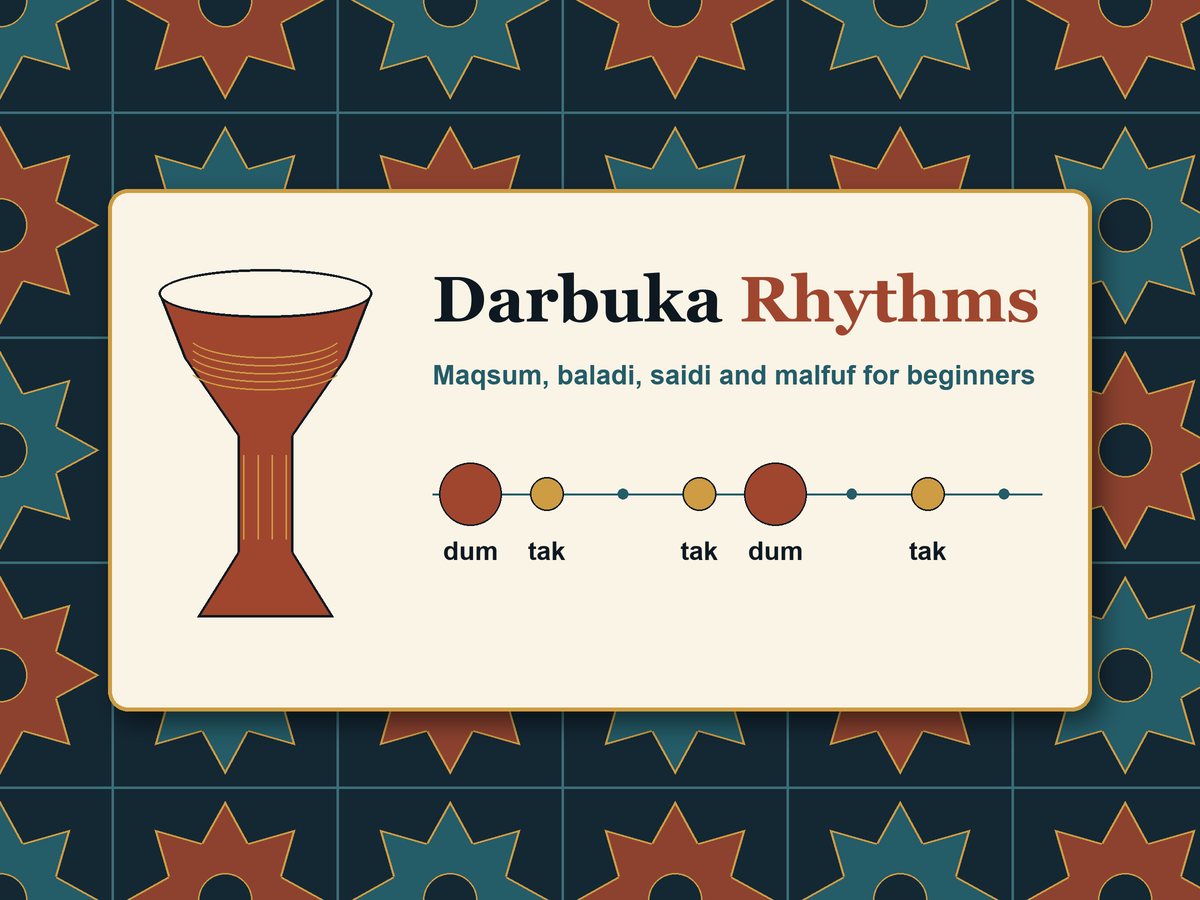
Learn the four darbuka rhythms behind most Arabic pop and dance music: maqsum, baladi, saidi and malfuf, with simple counts, the dum and tak strokes and a practice plan.
Meet the six instruments of the Arabic takht: oud, qanun, ney, violin, riq and darbuka. How each is played, what to listen for and which to learn first.
The 34th Arab Music Festival runs 20–30 October 2026 at the Cairo Opera House, honouring Hany Shaker. What it is, its 1932 roots and how to listen along.
ADE 2026 runs 21–25 October with 1,300+ events. How the Amsterdam Dance Event works, its 1996 origins, tickets, free events and tips for first-timers.
Street organs, carillons, midwinter horns, the rommelpot and the hommel: a guide to traditional Dutch instruments, how they work and where to hear them today.
Nagm (نغم) is Arabic for melody. We write beginner-friendly explainers on Arabic and Dutch music and link to the reference sources and official recordings we rely on, so you can listen for yourself. About Nagm